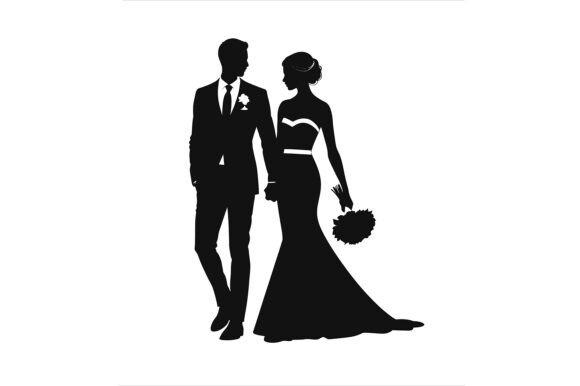
A Bride and Groom Walking, Holding Hands: A Practical Guide to Vector Illustrations for Design
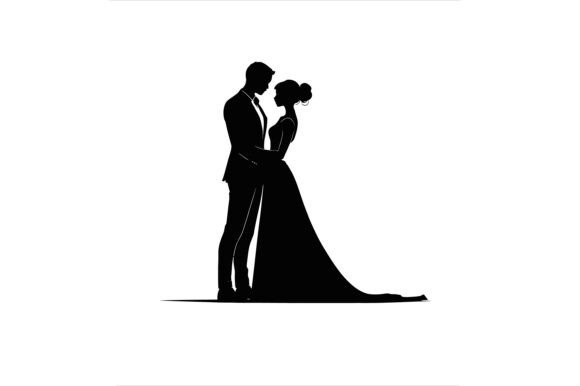
In the realm of graphic design and creative projects, the choice of imagery often dictates the emotional resonance of the final product. When creating wedding invitations, branding materials, or commemorative gifts, a simple depiction of A Bride and Groom Walking, Holding Hands can serve as a powerful focal point. This specific motif captures the essence of partnership, movement, and shared journey, making it a versatile asset for designers, crafters, and small business owners alike. However, not all digital assets are created equal. Understanding the technical specifications, format differences, and practical applications of high-quality vector illustrations is essential for anyone looking to elevate their visual communication.
Defining the Distinctive Value of Vector Assets
The illustration described as A Bride and Groom Walking, Holding Hands is not merely a static image; it is a scalable vector graphic (SVG) delivered in EPS (Encapsulated PostScript) format. This distinction is critical for professionals who require precision. Unlike raster images, which are composed of a fixed grid of pixels, vector graphics are defined by mathematical equations describing lines, curves, and shapes. This fundamental difference means that the image can be resized from a tiny icon on a mobile screen to a massive billboard without any loss of clarity or resolution.
For a project involving a couple walking hand-in-hand, the ability to adjust dimensions without pixelation is paramount. Whether you are designing a postage stamp-sized sticker or a full-size poster, the crisp edges and smooth gradients of the vector format remain intact. Furthermore, the fully editable nature of the EPS file allows for deep customization. Designers can alter the color palette to match a specific wedding theme, modify the background elements, or even adjust the posture of the figures slightly to fit a unique layout. This level of control transforms a generic stock image into a bespoke design element tailored to specific brand or personal needs.
Comparing Formats: EPS Versus JPEG and Alternatives
When evaluating resources for your next project, it is important to compare the available formats. The package for this specific illustration typically includes both an EPS file and a high-resolution JPEG. Each serves a distinct purpose, and understanding when to use one over the other is a key decision factor.
- EPS Files: These are the industry standard for professional print and design work. They offer maximum flexibility, allowing for layer separation, color adjustment, and infinite scaling. If you plan to send files to a commercial printer, create apparel using heat transfer vinyl, or integrate the image into complex layouts using software like Adobe Illustrator or CorelDRAW, the EPS format is the superior choice.
- JPEG Files: While raster-based, high-resolution JPEGs are excellent for quick-turnaround projects where editing capabilities are not required. They are universally compatible with web browsers, social media platforms, and basic photo editors. If you need to insert the image into a blog post, email newsletter, or a simple greeting card template without the overhead of opening vector software, the JPEG provides a ready-to-use solution.
Compared to purchasing individual photos or lower-quality clip art, this dual-format approach offers a balanced workflow. It eliminates the frustration of finding an image that looks great on a screen but blurs when printed large. Additionally, while many online marketplaces offer AI-generated images directly as raster files, the process of taking those concepts and fully vectorizing them—as done in this specific resource—ensures a clean, professional finish that raw AI outputs often lack. Raw AI generation can sometimes result in jagged edges or inconsistent anatomy, whereas a manually edited vector ensures the bride and groom look cohesive and polished.
Strengths and Tradeoffs of Customizable Vector Art
The primary strength of using a fully editable vector illustration like A Bride and Groom Walking, Holding Hands lies in its adaptability. In the world of print-on-demand (POD), consistency is key. A designer might need to place the same image on a t-shirt, a tote bag, and a mug. With a vector file, the artwork remains sharp across all these different substrates and sizes. For DIY crafters using cutting machines like Cricut or Silhouette, the clean paths of a vector file allow for precise cutting of vinyl or paper, ensuring that the final craft project has professional-grade edges.
However, there are tradeoffs to consider. Vector software requires a learning curve. Users unfamiliar with tools like Adobe Illustrator may find the interface intimidating compared to dragging and dropping a JPEG into Canva or Microsoft Word. In such cases, the included JPEG becomes the more practical option, sacrificing some customization for ease of use. Additionally, while the original illustration is designed to be high quality, the specific style—likely a clean line art or flat design aesthetic—may not suit every project. If a client requires hyper-realistic photography or a highly textured watercolor look, this vector style might not be the best fit without significant artistic manipulation.
Evaluating Use Cases and Best-Fit Scenarios
Determining whether this specific illustration is the right choice depends heavily on the intended application. Let us explore several realistic scenarios where this asset excels, alongside situations where alternative approaches might be necessary.
Ideal Applications
This asset is particularly well-suited for wedding stationery. Invitations, save-the-dates, and thank-you cards benefit from the romantic yet timeless appeal of a couple walking together. The ability to change colors means the illustration can match gold foil accents, pastel floral themes, or bold modern palettes. Similarly, for branding and logos, the simplicity of the vector lines makes it easy to scale down for business cards or app icons while maintaining legibility. For apparel merchandise, the clean outlines ensure that the design prints clearly on fabric without bleeding or losing detail during the curing process.
Crafters and scrapbookers also find immense value here. The ability to resize the image allows it to fit perfectly into album layouts or as a central motif for a handmade card. Because the file is fully editable, users can extract just the hands holding each other for a smaller accent piece or use the full figures for a page header.
When to Consider Alternatives
While versatile, this type of illustration may not be the optimal choice for every situation. If a project demands a photographic representation of real people, a vector illustration will feel too stylized. For example, a documentary-style wedding website or a news article about marriage trends would likely require actual photography rather than an artistic rendering. Furthermore, if the design requires intricate textures, such as grainy film effects or complex brush strokes, a pure vector file might appear too "clean" unless combined with other texture overlays.
Another consideration is the level of customization required. If a client needs a completely unique pose that differs significantly from the standard "walking holding hands" motif, starting with a pre-made vector might take longer than commissioning a custom illustration from scratch. In such cases, the time saved by buying a ready-made asset might be offset by the effort required to redraw significant portions of the design.
Decision Factors for Selecting Digital Assets
When researching options for your creative needs, consider the following factors to make an informed decision:
- Scalability Requirements: Will the image need to be used at various sizes? If yes, prioritize vector formats (EPS/AI/SVG).
- Editing Capabilities: Do you need to change colors, remove backgrounds, or isolate elements? Fully editable vectors are essential here.
- Software Proficiency: Are you comfortable using vector editing software? If not, rely on the included JPEG or seek simpler templates.
- Production Method: Is this for print, web, or physical crafting? Print and crafting generally demand higher resolution and vector precision, while web use can accommodate raster formats.
- Licensing and Originality: Ensure the asset is original and properly licensed for your intended use. Resources that disclose their creation process, such as being AI-conceptualized but manually vectorized, often provide better transparency regarding quality and rights.
Ultimately, the decision to use A Bride and Groom Walking, Holding Hands comes down to balancing aesthetic goals with technical constraints. For those seeking a blend of romantic symbolism and professional utility, this type of high-quality vector illustration offers a robust foundation. It bridges the gap between the rapid generation of modern AI concepts and the enduring reliability of traditional vector art, providing a tool that is both flexible and dependable for a wide range of adult-oriented creative endeavors.