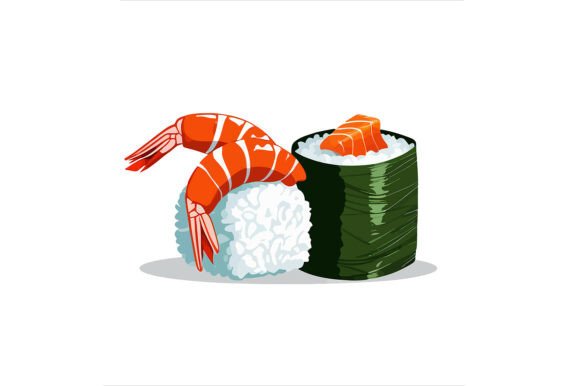
Vector Art of Sushi Roll: A Practical Design Asset Review
In the realm of digital design, the intersection of culinary aesthetics and scalable graphics presents a unique opportunity for creators. The Vector Art of Sushi Roll represents more than just an image of food; it is a functional tool designed to streamline workflows for professionals who require precision, flexibility, and high-resolution output. Whether you are managing a print-on-demand store, designing educational materials, or crafting branding elements for a restaurant, the utility of this specific asset lies in its technical format and adaptability. Unlike raster images that degrade when enlarged, vector illustrations maintain crisp edges at any scale, making them indispensable for modern commercial projects.
Technical Specifications and Format Utility
The core value of this illustration stems from its file structure. You receive two distinct formats: a fully editable EPS (Encapsulated PostScript) file and a high-resolution JPEG. This dual-format delivery addresses two different stages of the creative process. The EPS file serves as the master source, allowing designers to manipulate individual paths, nodes, and color fills using industry-standard software like Adobe Illustrator or CorelDRAW. This level of access is critical for customization. For instance, if a project requires a specific brand color palette, the ability to recolor the sushi components without losing definition is a significant time-saver compared to manually redrawing elements.
Conversely, the included JPEG provides immediate usability for quick-turnaround tasks where deep editing is unnecessary. It offers a ready-to-use preview that can be dropped directly into web layouts, social media posts, or preliminary mockups. However, for professional applications involving large-scale printing or complex compositing, the EPS remains the superior choice. Its scalability ensures that whether the design is shrunk to fit a business card or expanded to cover a billboard, the visual integrity remains uncompromised. This reliability is a key factor for anyone prioritizing quality control in their deliverables.
Origins and Quality Assurance
It is important to understand the provenance of this asset. While the initial concept was generated using AI technology, the final product has undergone rigorous manual intervention. The creator has fully vectorized, resized, and edited the illustration to ensure it meets professional standards. This distinction is vital in an era where raw AI outputs often suffer from structural inconsistencies, such as jagged lines, unclosed paths, or illogical layering. By refining the AI-generated concepts, the final Vector Art of Sushi Roll avoids these common pitfalls. The result is a clean, organized file structure that behaves predictably within design software, reducing the hours typically spent on cleanup and path optimization.
This hybrid approach leverages the speed of generative AI while maintaining the precision required by human designers. The manual editing phase ensures that the sushi rolls possess realistic proportions and logical layering, which is essential for maintaining visual credibility in commercial work. For professionals who cannot afford the risk of a low-quality asset undermining their brand, this attention to detail provides necessary peace of mind.
Practical Applications Across Industries
The versatility of this illustration allows it to serve multiple industries effectively. In the context of print-on-demand products, the ability to resize the artwork without pixelation is non-negotiable. T-shirts, tote bags, and mugs require graphics that remain sharp regardless of the garment size or fabric texture. The Vector Art of Sushi Roll fits this requirement perfectly, enabling entrepreneurs to test various sizes and placements before committing to production runs. Similarly, for apparel merchandise, the clean lines of the vector format translate well into screen printing or embroidery digitization, ensuring the final physical product looks as intended.
Beyond merchandise, the asset finds strong utility in educational materials and publishing. Teachers creating lesson plans about Japanese culture, nutrition, or global cuisines benefit from having a clear, high-quality graphic that can be integrated into worksheets, presentations, or textbooks. The clarity of the vector lines makes it easy to annotate or highlight specific parts of the roll, adding pedagogical value. Furthermore, for scrapbooking enthusiasts and DIY crafters, the ability to cut out shapes precisely using die-cut machines is a major advantage. The defined paths allow for accurate cutting, resulting in professional-looking physical crafts rather than rough, hand-trimmed edges.
In the corporate sector, this illustration can function as a branding element or logo component. Restaurants, food delivery services, and catering companies often need imagery that conveys freshness and authenticity. A custom-colored version of this sushi roll can become part of a larger identity system, appearing on menus, signage, and packaging. Because the file is fully editable, marketing teams can adjust the composition to align with seasonal promotions or specific menu items, ensuring the visual assets remain relevant over time.
Evaluation of Workflow Integration
When integrating new assets into an existing workflow, efficiency is paramount. The Vector Art of Sushi Roll scores highly here due to its straightforward organization. Designers familiar with vector software will find the layers logical and the paths optimized for smooth manipulation. There is no need for extensive pre-processing, which accelerates the timeline from concept to completion. This efficiency translates directly to cost savings for freelancers and agencies operating under tight deadlines.
However, users should consider the stylistic limitations. As a stylized illustration, it may not suit projects requiring photorealism. If a client demands a hyper-realistic depiction of food textures and lighting, a photograph might be more appropriate. This asset excels in contexts where a clean, graphic, or illustrative style is preferred—such as flat design trends, iconography, or decorative patterns. Understanding this stylistic boundary helps prevent mismatches between the asset and the project's visual goals.
Long-Term Value and Strategic Use
Investing in high-quality vector art offers long-term benefits that extend beyond a single project. Unlike stock photos that may have licensing restrictions or limited resolution, a purchased vector file grants the user the freedom to modify and reuse the asset across various campaigns. The Vector Art of Sushi Roll can be adapted for a summer campaign one year and repurposed for a winter menu the next, simply by altering colors or background elements. This reusability maximizes the return on investment, making it a smart addition to a designer's library.
For small business owners and serious hobbyists, owning the source files empowers them to maintain consistency across all touchpoints. From a website header to a printed invitation, the visual language remains cohesive because the underlying geometry is identical. This consistency builds brand recognition and trust with the audience. Additionally, as display technologies evolve towards higher resolutions and larger screens, the future-proof nature of vector graphics ensures that these designs will remain viable for years to come.
Recommendations for Implementation
To get the most out of this asset, it is recommended to always work from the original EPS file whenever possible. Save your customized versions in separate layers or documents to preserve the integrity of the master file. When exporting for web use, convert the vector to a high-quality SVG or PNG to balance load times with visual fidelity. For print, ensure the output settings match the requirements of the printing service, taking advantage of the CMYK color conversion capabilities inherent in vector software.
Ultimately, the Vector Art of Sushi Roll is a robust resource for those who value precision and adaptability. It bridges the gap between creative inspiration and technical execution, offering a solution that is both aesthetically pleasing and functionally reliable. Whether used for a quick social media graphic or a comprehensive branding overhaul, its strengths lie in its flexibility and the professional quality of its construction. For designers seeking to enhance their toolkit with versatile, high-performance assets, this illustration stands out as a practical and valuable addition.