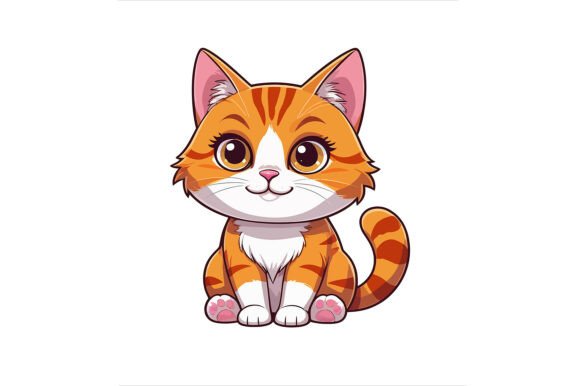
Understanding the Versatility of an Illustration of a Cute Cat for Modern Design
In the crowded landscape of digital assets, finding a visual element that balances aesthetic appeal with technical flexibility is often the most challenging part of a design workflow. An Illustration of a Cute Cat represents more than just a whimsical image; it serves as a foundational asset for branding, merchandise, and personal creative projects. When evaluating this specific type of vector resource, it is essential to look beyond the surface charm and understand the technical specifications that determine its utility. Unlike standard raster images, which degrade when enlarged, a high-quality vector illustration maintains crisp edges and clean lines regardless of scale. This distinction is critical for designers who need to adapt a single concept across various mediums, from small social media icons to large-format wall art.
The core value of an Illustration of a Cute Cat lies in its format. Typically delivered as an EPS (Encapsulated PostScript) file, this resource allows for complete editability within professional vector software. This means that every curve, color fill, and shape can be manipulated without compromising the integrity of the original artwork. For professionals managing print-on-demand services or crafting DIY projects, this level of control is non-negotiable. It eliminates the guesswork associated with resizing and ensures that the final output meets industry standards for resolution and clarity. While a JPEG version is often included for immediate preview or low-resolution web use, the true power of the asset resides in the editable vector data.
Technical Advantages: Vector Formats vs. Raster Alternatives
When comparing an Illustration of a Cute Cat to other graphic resources, the primary differentiator is the underlying file structure. Most free clipart found on the internet consists of raster formats like PNG or JPG. These images are composed of pixels, making them suitable for screens but problematic for print. If a designer attempts to stretch a pixel-based cat illustration to fit a poster or a t-shirt, the result is often a blurry, blocky image that looks unprofessional. In contrast, the vector nature of the EPS file ensures mathematical precision. The lines remain smooth whether the image is scaled down to the size of a postage stamp or blown up to cover a billboard.
This scalability introduces a significant cost-benefit analysis for creators. Purchasing or downloading a single vector file can replace the need to buy multiple resolutions of the same image. For example, a business owner creating a line of apparel might need a small logo for a tag, a medium graphic for a tote bag, and a large design for a hoodie. With a raster image, they would need three separate files, each potentially costing money and storage space. With a vector Illustration of a Cute Cat, one file serves all purposes. However, this advantage comes with a tradeoff: the user must have access to compatible software, such as Adobe Illustrator, CorelDRAW, or Inkscape, to fully utilize the editable features. If a user lacks these tools, the benefits of the vector format are diminished, though the included high-resolution JPEG still offers a viable solution for quick-turnaround digital tasks.
Evaluation of Customization Capabilities
Beyond simple resizing, the ability to customize details is a defining feature of this asset. A static image limits a designer to the colors and poses provided by the creator. An editable vector file, however, opens the door to rebranding and adaptation. Consider a scenario where a pet shop wants to use a cat illustration for their promotional materials but needs the cat's collar to match their brand's specific shade of blue. With a standard image, this requires complex photo editing work that may result in unnatural artifacts. With an Illustration of a Cute Cat in EPS format, the color change is a matter of selecting the object and adjusting the fill value. This efficiency saves time and reduces the barrier to entry for personalized marketing campaigns.
Furthermore, the modular nature of vector illustrations allows for deconstruction. Elements of the cat—such as the ears, eyes, or tail—can be isolated and repurposed for other designs. This modularity is particularly useful for educational materials or scrapbooking, where components might need to be rearranged to create new compositions. The "cute" aesthetic is not just a stylistic choice; it is a psychological tool that engages audiences. By customizing the expression or accessories of the cat, designers can tailor the emotional impact of the image to suit specific contexts, ranging from playful children's books to sophisticated greeting cards.
Comparing Styles and Approaches in Digital Art
While there are countless styles of animal illustrations available, the specific approach taken in this Illustration of a Cute Cat warrants closer examination. Many modern illustrations rely heavily on AI generation to produce initial concepts. While AI tools offer rapid prototyping, they often struggle with consistent line weights, clean topology, and the removal of unwanted artifacts. A common pitfall of raw AI-generated images is that they are raster-based and lack the structural integrity required for professional vector work.
This particular resource distinguishes itself through a hybrid workflow. The concept may originate from AI-assisted ideation, but the final product undergoes rigorous manual vectorization and editing. This process ensures that the curves are mathematically perfect and the layers are organized logically. When comparing this to purely AI-generated outputs, the human touch provides a level of reliability and polish that algorithms alone cannot guarantee. For a designer concerned with E-E-A-T (Experience, Expertise, Authoritativeness, and Trustworthiness), knowing that a professional has curated and refined the asset adds significant value. It bridges the gap between the speed of generative tools and the quality of hand-crafted design.
Another comparison point involves the style category. "Cute" is a broad term that can range from minimalist line art to detailed watercolor effects. This illustration typically falls into a clean, scalable vector style that prioritizes clarity over photorealism. This makes it distinct from photographic stock images, which carry licensing complexities and higher costs. It also differs from highly complex, textured illustrations that may not reproduce well on certain fabrics or paper stocks. The simplicity of the vector approach ensures compatibility with a wide array of printing techniques, including screen printing, embroidery, and direct-to-garment transfers.
Decision Factors: When to Choose This Asset
Determining whether an Illustration of a Cute Cat is the right choice depends largely on the scope and longevity of the project. For short-term social media posts where high resolution is less critical, a simple PNG or even a screenshot might suffice. However, for any project involving physical production or long-term branding, the investment in a vector file is justified. If you are planning to launch a line of stickers, t-shirts, or posters, the ability to resize without quality loss is a mandatory requirement. Using a lower-quality alternative could lead to customer dissatisfaction and damage to your brand reputation.
Additionally, consider the frequency of use. If the image will be used repeatedly across different platforms and products, the versatility of the EPS format becomes a major asset. It future-proofs the design, allowing for updates and variations years down the line without needing to commission new artwork. Conversely, if the project is a one-off internal document or a temporary flyer where the image will never be printed larger than a standard page, the complexity of working with vectors might be unnecessary overhead. In such cases, the included high-resolution JPEG offers a practical middle ground, providing sufficient quality for digital displays without requiring specialized software.
Finally, the intended audience plays a role in the decision. The "cute" factor appeals broadly, making it effective for general consumer goods, educational content, and family-oriented events. However, for corporate environments requiring a strictly formal tone, a stylized animal illustration might feel out of place unless carefully integrated. Designers should evaluate the context in which the image will appear to ensure it aligns with the overall message. When used correctly, this type of illustration adds warmth and approachability to a brand, fostering a connection with the audience that sterile or generic graphics often fail to achieve.
In summary, the choice to utilize an Illustration of a Cute Cat hinges on the need for flexibility, quality, and customization. While alternatives exist, few offer the same combination of technical robustness and aesthetic appeal. By understanding the strengths of vector formats and the limitations of raster images, designers can make informed decisions that enhance their projects and deliver professional results. Whether for crafting, commercial merchandise, or digital branding, the right asset serves as a powerful tool for communication and creativity.