Romantic Wedding Couple Wreath Art: A Guide to Selection and Application
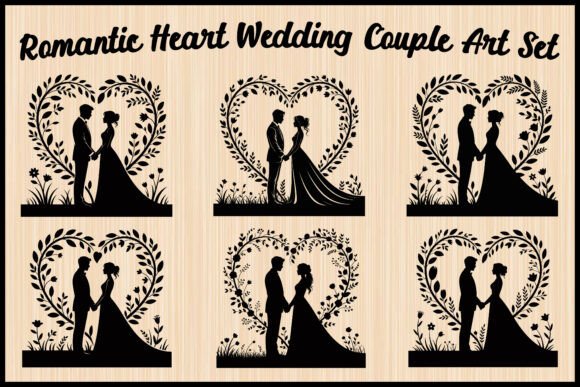
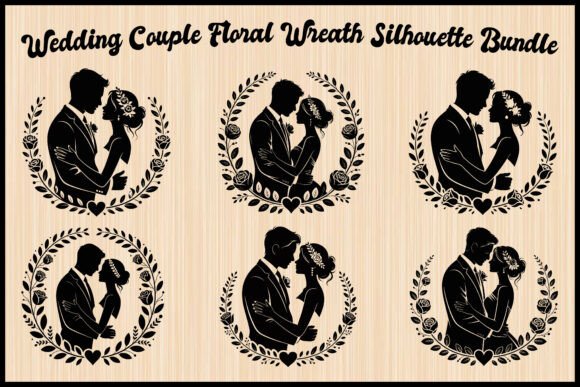
In the landscape of wedding design, visual motifs serve as more than mere decoration; they establish the emotional tone of the event and its associated materials. Among the various stylistic choices available, Romantic Wedding Couple Wreath Art has emerged as a distinct category that blends human connection with botanical elegance. This style typically features a digital silhouette of a couple in an embrace, framed or intertwined with delicate floral elements. For designers, DIY enthusiasts, and couples planning their own events, understanding the specific utility, format requirements, and aesthetic tradeoffs of this art style is essential for making informed decisions.
Defining the Aesthetic and Functional Scope
Romantic Wedding Couple Wreath Art is characterized by the juxtaposition of solid, recognizable human forms against soft, intricate botanical backgrounds. Unlike traditional portraits that rely on facial details or shading, this approach utilizes negative space and outline precision. The "wreath" component is not merely a border but often integrates into the composition, wrapping around the figures to symbolize unity, protection, and the cycle of life.
This specific aesthetic offers a timeless quality that transcends fleeting trends. While some wedding themes lean heavily into maximalism or hyper-realism, the silhouette style maintains a sophisticated minimalism. It allows the viewer to project their own emotions onto the image while retaining a clear narrative of partnership. The distinctiveness lies in its versatility; the same design can appear rustic when paired with kraft paper and dried flowers, or ultra-modern when rendered in metallic foil on a sleek invitation suite.
Evaluating Digital Formats and Technical Requirements
When sourcing Romantic Wedding Couple Wreath Art, the file format is often the most critical technical factor. A comprehensive bundle typically includes multiple formats, each serving a different production method. Understanding the strengths and limitations of these formats prevents workflow bottlenecks and ensures high-quality output.
- SVG (Scalable Vector Graphics): These are the industry standard for cutting machines like Cricut or Silhouette. Because SVGs are vector-based, they remain crisp at any size, from a small button to a large vinyl decal. They are essential for creating physical items such as personalized wedding favors, decals for glassware, or layered paper crafts. However, they require compatible software to edit node points if customization is needed.
- PNG (Portable Network Graphics): High-resolution PNGs with transparent backgrounds are ideal for digital compositing. If you need to place the couple's silhouette over a photograph, a textured background, or a complex color gradient, PNGs offer the cleanest edges without white boxes. They are raster-based, meaning scaling them up too significantly can result in pixelation, so resolution must be verified before use.
- JPG (Joint Photographic Experts Group): Suitable for web display and standard printing where transparency is not required. JPGs are universally compatible with email clients and basic word processors, making them convenient for quick proofs or social media announcements. However, they lack the editing flexibility of vector files.
- EPS (Encapsulated PostScript): This professional vector format is designed for print professionals and advanced graphic designers. EPS files allow for deep customization, including changing line weights, altering flower types, or adjusting the couple's pose within vector editing software. They are the best choice for offset printing or large-scale signage.
Comparing Silhouettes with Alternative Design Styles
While Romantic Wedding Couple Wreath Art is popular, it is not the only option for representing a couple in wedding stationery. Comparing it with other styles helps clarify which approach fits a specific vision.
Photorealistic Illustrations: Some couples prefer custom watercolor or oil-style illustrations that capture specific facial features and attire details. These offer a high degree of personalization but come with a significant tradeoff: cost and time. Custom commissions can take weeks and cost hundreds of dollars. In contrast, pre-designed wreath bundles provide an immediate, affordable solution. The downside is the lack of individual likeness; the couple remains anonymous, represented by form rather than face.
Monogram and Typography-Heavy Designs: Many modern weddings opt for designs centered around the couple's initials. While elegant, typography-focused art lacks the narrative element of the embracing couple. The silhouette style conveys intimacy and action—two people coming together—whereas monograms are static symbols. If the goal is to evoke emotion quickly, the wreath art is often more effective than text alone.
Flat Iconography: Simple flat icons of rings or hearts are common but can feel generic. The botanical complexity of the wreath art adds a layer of sophistication that flat icons often miss. The interplay between the organic curves of the flowers and the defined lines of the human figures creates visual interest that holds up well under close inspection.
Strengths, Tradeoffs, and Best-Fit Scenarios
The decision to use Romantic Wedding Couple Wreath Art should be based on the intended application and the desired level of customization. Its primary strength is scalability. Because the core assets are often vector-based, a single purchase can cover a wide range of needs, from digital invitations to physical signage.
However, there are tradeoffs. The stylized nature of silhouettes means they may not suit every cultural or religious tradition where detailed representation is preferred. Additionally, while the floral elements are beautiful, they are fixed in the design unless the user has the technical skill to manipulate EPS or SVG files. Users seeking to change the flower species or the seasonality of the foliage may find themselves limited by the original artwork.
This style is the right choice when:
- The budget requires a balance between professional quality and affordability.
- The timeline is tight, and custom illustration is not feasible.
- The design goal is to create a cohesive look across multiple mediums (digital and physical).
- The couple prefers a symbolic representation over a literal portrait.
Conversely, readers may need another option if they require exact likenesses, if the wedding theme is strictly non-botanical (e.g., industrial or nautical), or if the target audience relies on accessibility features that might conflict with complex visual patterns.
Practical Applications and Use Cases
The versatility of this art bundle extends beyond simple decoration. For wedding invitations, the wreath art serves as a focal point that frames the text elegantly. When printed on high-quality cardstock, the contrast between the black silhouette and the paper texture creates a tactile experience.
For personalized gifts, the SVG format allows for heat-transfer vinyl applications on bridal party shirts, tote bags, or mugs. The clean lines of the silhouette ensure that the transfer adheres smoothly without trapping air bubbles, a common issue with overly detailed raster images.
In the realm of bridal shower decor, these designs can be scaled up for backdrops or cut from chipboard for dimensional centerpieces. The inclusion of multiple formats in a typical bundle ensures that one design can be used digitally for save-the-dates (JPG/PNG) and physically for the reception (SVG/EPS), maximizing the value of the resource.
Making an Informed Decision
Ultimately, the choice to incorporate Romantic Wedding Couple Wreath Art depends on aligning the visual language with the event's narrative. It is a tool that bridges the gap between mass-produced templates and expensive custom commissions. By evaluating the file formats against the intended production methods and comparing the silhouette style against other illustrative options, planners can determine if this aesthetic meets their specific needs.
For those prioritizing a romantic, timeless, and adaptable visual identity, the combination of intimate silhouettes and delicate botanical frames offers a compelling solution. It provides a foundation for creativity while respecting the practical constraints of time and budget, making it a valuable asset in the modern wedding planning toolkit.